
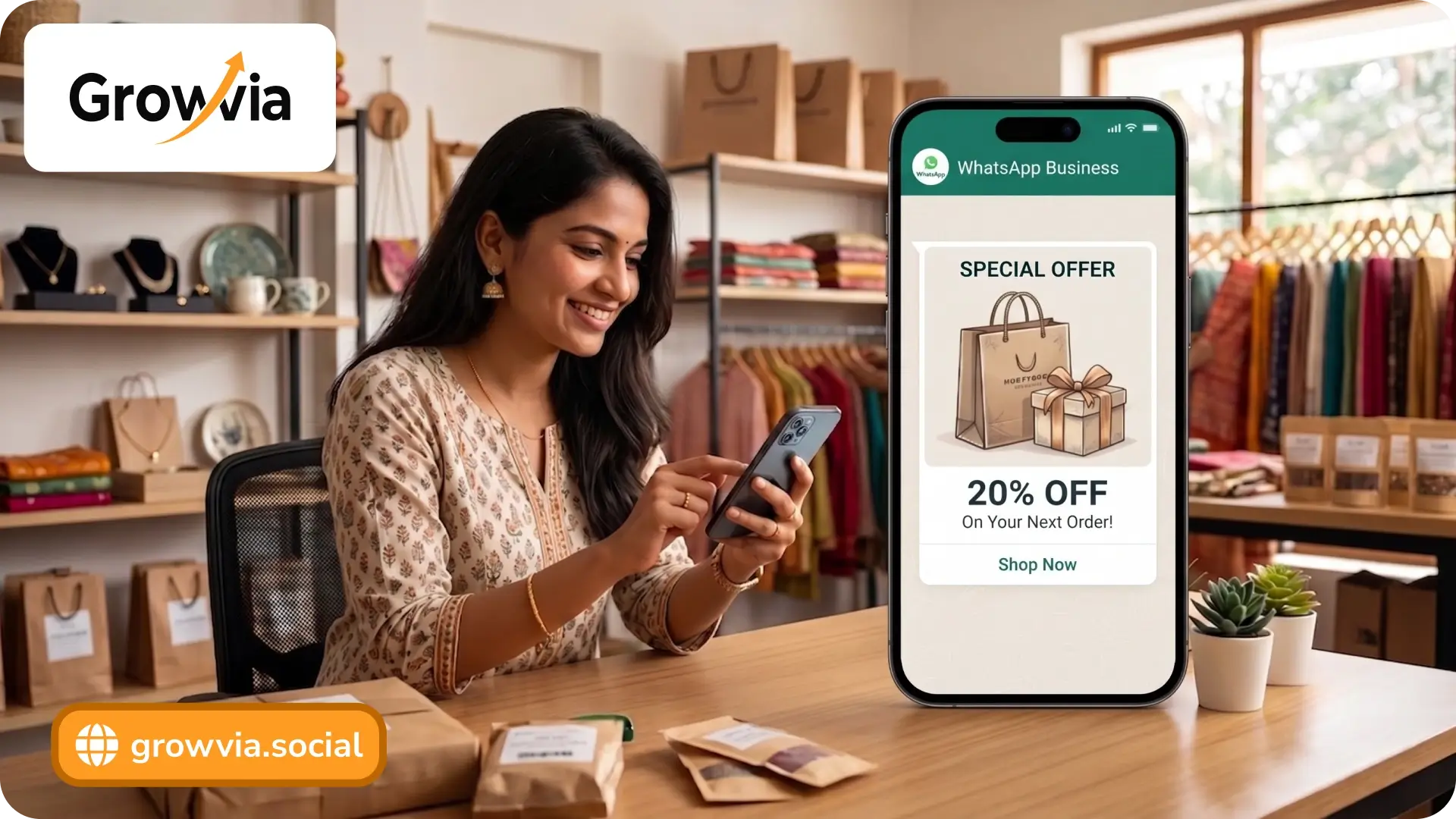
Marketing messages are everywhere, but getting customers to actually notice them is becoming increasingly difficult. WhatsApp offers businesses a different advantage: the ability to communicate through a platform people already use every day. According to Meta, WhatsApp has more than 3 billion monthly active users globally , giving businesses access to a massive audience through direct, real-time conversations.
Still, sending promotional broadcasts alone does not create results. A strong WhatsApp initial marketing strategy begins with understanding the audience, identifying the right moments to communicate, and giving each message a clear purpose. This becomes particularly important when building a WhatsApp marketing strategy for B2B company , where conversations often support longer decision-making processes and multiple stakeholders.
A well-planned approach can help businesses nurture leads, reconnect with existing customers, share relevant updates, and encourage meaningful action. The real opportunity lies in making each interaction timely, relevant, and worth opening.
What is a WhatsApp Marketing Strategy?
A WhatsApp marketing strategy is a structured plan for using WhatsApp to achieve specific business goals through targeted customer communication. It goes beyond sending promotional broadcasts. The strategy determines who receives a message, what information they receive, when it is sent, and what action the business expects in return.
For example, a WhatsApp business marketing strategy may segment customers based on their purchase history or engagement. A restaurant can send a weekday lunch offer to customers who frequently visit during working hours, while an inactive customer may receive a personalized incentive designed to encourage another visit. This makes campaigns more relevant than sending one generic offer to the entire contact list.
A WhatsApp status marketing strategy works differently. Businesses can use Status updates for product launches, limited-time offers, behind-the-scenes content, customer testimonials, or event announcements. Since Status content disappears after 24 hours, it can also create a sense of immediacy around time-sensitive campaigns.
When messaging, Status content, customer segmentation, and follow-ups work together, WhatsApp becomes a channel for guiding customers towards specific business actions rather than simply delivering advertisements. These principles come to life in real WhatsApp marketing examples from brands that have used this approach effectively.
1. Use Carousel Templates to Increase Clicks
Carousel templates allow businesses to present multiple products, services, or offers within a single WhatsApp message. Each card can include an image, short description, and CTA button, allowing customers to scroll through different options without receiving multiple separate messages.
A single product image may limit a customer’s choices, while a long promotional message can make it harder to scan the available options. Carousel templates create a more visual browsing experience and allow businesses to highlight several relevant offerings within the same campaign. Each card can also lead customers toward a specific landing page, product page, or action.
How to Implement
- Showcase 3–5 relevant products instead of an entire catalogue.
- Group products around a common theme, campaign, or customer interest.
- Highlight the product's benefit or use case, not just its price.
- Use a clear CTA such as “View Product,” “Learn More,” or “Buy Now.”
- Keep the text on each card short and easy to scan.
- Place your strongest or most popular offering first to capture attention quickly.
When to Use
- Product launches
- Seasonal promotions
- Cross-selling campaigns
- Upselling campaigns
- Curated product recommendations
2. Automate Reminders and Notifications at the Right Moment
Automation can make a WhatsApp marketing strategy more timely and relevant. Messages can be triggered by customer actions such as abandoning a cart, completing a purchase, booking an appointment, or showing interest in a product.
Order confirmations and delivery updates keep customers informed, while cart reminders and post-purchase follow-ups can encourage further action. This also strengthens a WhatsApp business marketing strategy by replacing broad, untargeted campaigns with communication linked to a customer's recent interaction.
Best Practices
- Trigger messages based on customer behaviour.
- Use reminders for carts, bookings, and purchases.
- Keep messages relevant and action-oriented.
- Avoid sending too many notifications.
Ready-to-Use WhatsApp Template Examples
- Abandoned Cart: “Hi [Name], you left [Product] in your cart. Ready to complete your purchase?”
- “Hi [Name], you left [Product] in your cart. Ready to complete your purchase?”
- Back in Stock: “Hi [Name], [Product] is back in stock. Place your order now.”
- “Hi [Name], [Product] is back in stock. Place your order now.”
- Appointment Reminder: Reminder: Your appointment is scheduled for [Day] at [Time].”
- Reminder: Your appointment is scheduled for [Day] at [Time].”
- Order Delivered: “Your order [Number] has been delivered. Need help or want to share feedback?”
- “Your order [Number] has been delivered. Need help or want to share feedback?”
3. Display Multi-Product Catalogs
WhatsApp catalogues allow businesses to showcase multiple products directly within a chat, making it easier for customers to browse available options, view product details, and take the next step toward a purchase.
For a WhatsApp marketing strategy for B2B company , catalogues can also simplify product discovery for buyers who need to explore multiple offerings before enquiring. Sales teams can share relevant product collections instead of sending long lists, PDFs, or multiple links.
This approach reduces unnecessary steps and keeps the interaction within a familiar messaging environment, making it useful for repeat purchases, reorders, and assisted selling.
Usage Tips
- Categorise products for easier navigation
- Highlight relevant products instead of sharing everything
- Add clear CTAs such as “Enquire Now” or “Buy Now.”
- Update catalogues for seasonal campaigns and new launches.
4. Build Enhanced Personalised Chat Flows
Enhanced personalized chat flows use customer data and conversational logic to create guided interactions instead of relying on generic replies or static links. Each response can adapt based on customer intent, previous interactions, or the information shared during the conversation.
This reduces unnecessary steps such as repeated questions, long forms, and redirects. Customers can book appointments, explore relevant products, raise service requests, or receive recommendations through a more natural conversation.
A WhatsApp status marketing strategy can complement these chat flows by using Status updates to build interest around offers, products, or announcements before customers enter a direct conversation.
Key Personalization Tactics
- Use customer names and purchase history
- Segment contacts by interest or journey stage.
- Tailor follow-ups and recommendations.
- Keep conversations short and focused.
5. Allow Payments Directly Inside WhatsApp
Allowing customers to make payments within WhatsApp can reduce friction at the final stage of a purchase. Instead of moving customers through multiple apps or payment pages, businesses can keep the transaction connected to the conversation.
This can be particularly useful for product orders, consultation fees, bookings, renewals, and event registrations. Customers can ask questions, confirm their decision, and complete the payment through a simpler flow.
In India, where UPI is widely used, in-chat payment options can make the checkout experience more convenient and reduce the chances of customers dropping off before completing a transaction.
Benefits
- Simplifies the checkout process
- Reduces unnecessary platform switching
- Supports faster transaction completion
- Creates a smoother customer experience
How GrowVia Helps Businesses Build a Smarter WhatsApp Marketing Strategy
A successful WhatsApp marketing strategy needs more than promotional messages. Businesses need the right tools to engage customers at the right time, encourage repeat visits, and build stronger relationships through every interaction.
GrowVia helps businesses bring these efforts together through a single platform. Create targeted WhatsApp campaigns, automate customer communication, promote offers, and connect engagement with loyalty and reward initiatives. Instead of managing customer interactions across disconnected tools, businesses can build more organised campaigns based on their marketing goals and customer behaviour.
With GrowVia, WhatsApp can become an active part of your customer engagement and retention strategy. Use every conversation as an opportunity to drive action, strengthen loyalty, and bring customers back to your business.
Build a smarter WhatsApp marketing strategy with GrowVia.
Grow faster with GrowVia
GrowVia helps businesses launch loyalty programs, automate customer communication, collect customer data, and measure repeat purchase growth from one simple platform.
- Automated welcome and win-back campaigns
- Reward tracking for repeat visits
- Customer segments based on behavior
- Review and referral growth support
Frequently Asked Questions
There is no fixed number. The right frequency depends on how useful and relevant the messages are. Frequent campaigns with little value can lead to disengagement, while timely updates, personalised offers, and useful reminders are more likely to keep customers engaged.