
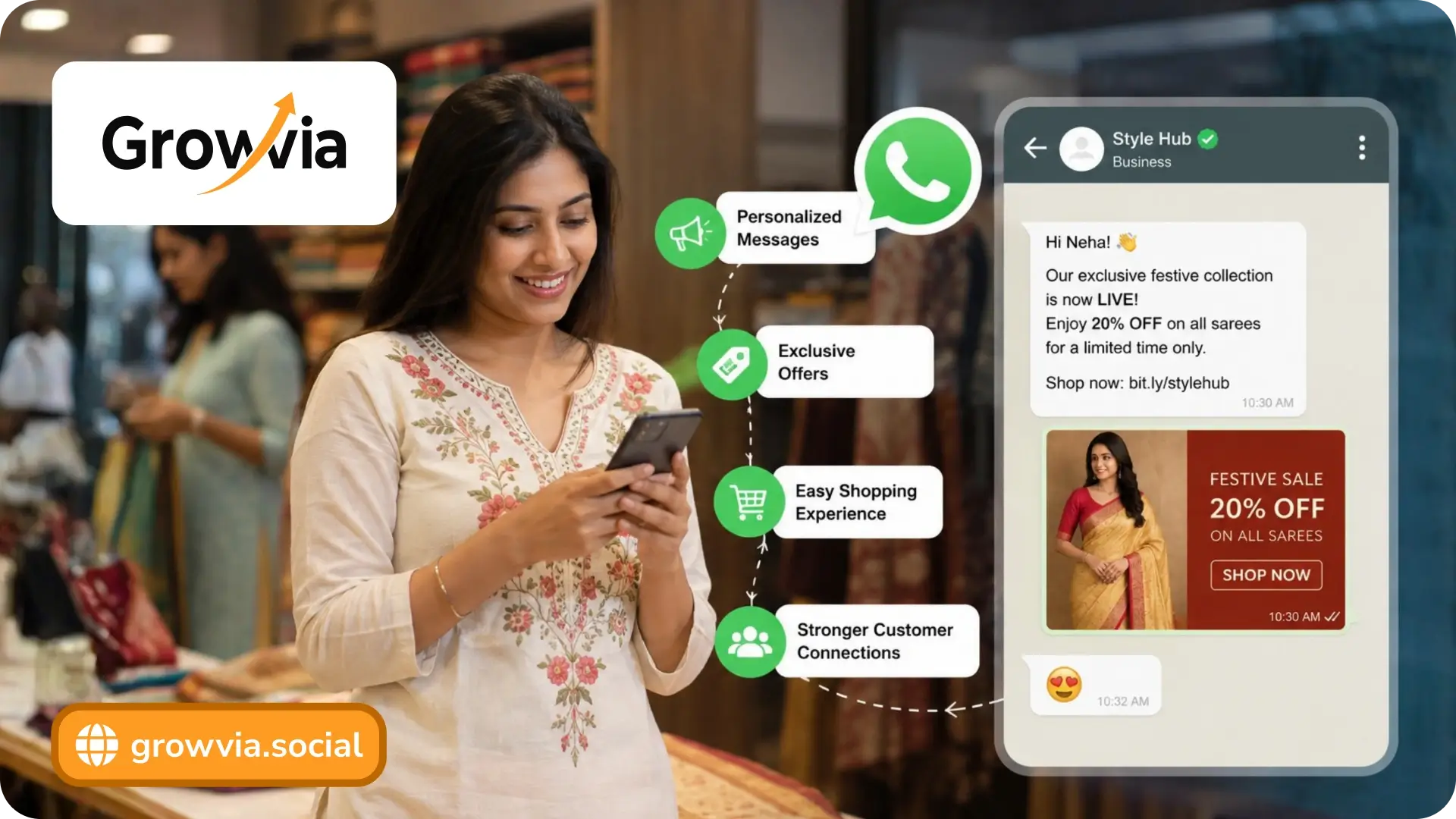
WhatsApp is no longer just where customers ask, “Is this product available?” It is increasingly becoming a place where they discover products, book appointments, recover abandoned purchases, and interact with brands. Meta says more than 3 billion people use WhatsApp every day, while more than 1 billion active business threads now take place across WhatsApp, Messenger, and Instagram every day.
The opportunity is particularly significant in India, where 91% of online adults chat with businesses weekly, according to a Kantar 2025 report cited by Meta. But reach alone does not make a WhatsApp campaign successful. A generic “20% OFF - Shop Now!” message can easily become another ignored notification.
The more effective WhatsApp marketing campaign examples use the platform differently; they respond to customer behavior, offer useful information, create timely conversations, or remove friction from the path to purchase. From Flipkart’s interactive promotions to abandoned-cart reminders and appointment campaigns, these WhatsApp marketing examples show what businesses can learn from campaigns that turn messaging into measurable customer action.
Flipkart - Turn Product Promotion Into an Interactive Experience
For its Big Billion Days sale, Flipkart went beyond sending customers a conventional sale announcement. In 2019, it launched the Big B WhatsApp Bot, an interactive chatbot built around Amitabh Bachchan’s persona. Users could enter through Click-to-WhatsApp ads and interact with the bot through quizzes, trivia, rich media, and emoji-based games that revealed product offers. The chatbot was available in both Hindi and English, helping make the experience more accessible to a wider Indian audience.
The campaign generated 1.3 lakh unique conversations , with users spending an average of nearly seven minutes interacting with the virtual assistant. Reported campaign results included 3.5x more conversions, 7x more high-quality visitors, and $2.5 million in revenue.
What made the campaign effective was the shift from promotion to participation. Instead of simply asking customers to view an offer, Flipkart gave them a reason to interact, discover deals, and continue the conversation.
SNOCKS - Use WhatsApp for Customer Reactivation
SNOCKS, a German D2C brand, treats WhatsApp as a retention and revenue channel, rather than simply another place to broadcast promotions. Its strategy combines event-based campaigns such as product drops and restocks with automated customer-journey messages for abandoned carts, post-purchase follow-ups, cross-selling, and reactivation.
The brand also uses segmentation to make these messages more relevant. For example, customers can receive personalized product recommendations after purchasing, reminders based on recurring purchase patterns, or targeted messages when they become inactive. For reactivation, SNOCKS uses specific reasons to return, such as a restock or exclusive offer, instead of repeatedly sending generic discounts.
The result demonstrated why existing customers can be a valuable WhatsApp audience. According to Chatarmin’s 2026 analysis, SNOCKS generated €3 million in revenue from its WhatsApp newsletter in one year, while its WhatsApp open and conversion rates increased by around 150% compared with its classic email campaigns.
Hellmann’s - Provide Value Instead of Just Promoting Products
Hellmann’s WhatsCook campaign is one of the clearest examples of turning WhatsApp into a useful customer service rather than another promotional channel. Launched in Brazil, the campaign connected users with real chefs through WhatsApp. After registering, customers could share photos of ingredients they had at home, and chefs suggested recipes using those ingredients, including Hellmann’s mayonnaise. The chefs also used photos, videos, and illustrations to guide users through the cooking process.
The campaign reportedly attracted around 13,000 participants, who spent approximately 65 minutes interacting with the brand on average. Its success also led Hellmann’s to expand WhatsCook into other Latin American markets.
The important lesson is that effective marketing messages examples on WhatsApp do not always need to lead with a discount or product pitch. Hellmann’s gave customers an immediate reason to open the conversation: they had ingredients but did not know what to cook. The brand then naturally became part of the solution.
Tata CLiQ - Turn Customer Activity Into Cross-Selling Opportunities
Tata CLiQ shows how WhatsApp marketing examples can become more effective when messages are driven by customer behavior rather than broad audience targeting. The brand initially used WhatsApp for order and transaction updates, but later moved toward more sophisticated targeting based on shoppers’ activity. For instance, a customer who frequently browsed kitchenware could receive a WhatsApp recommendation for a popular cast-iron pan set. It also used behavioral data for abandoned-cart reminders, price-drop alerts, and personalized offers.
This approach makes a significant difference from sending the same promotion to every customer. Instead of saying, “Check out our latest offers,” the message reflects what the customer has already shown interest in. The recommendation therefore feels more like a useful suggestion than an unsolicited advertisement.
The results were notable. Tata CLiQ reported a 57% click-through rate, while customers who reached its website through WhatsApp were 1.7x more likely to purchase. During its Diwali and Black Friday campaigns in October 2021, WhatsApp generated $500,000 in attributed sales and delivered 10x higher ROI than email, SMS, and in-app push notifications.
What These WhatsApp Marketing Examples Have in Common
The best WhatsApp marketing campaign examples have one thing in common: they treat WhatsApp as a customer engagement channel rather than a place to copy-paste promotional messages. Their strategies are built around context, timing, relevance, and a clear reason for the customer to respond.
- Right Audience: The strongest WhatsApp marketing examples target specific customer segments instead of broadcasting identical offers to everyone.
- Right Timing: Effective campaigns respond to actions such as cart abandonment, purchases, browsing, appointments, or periods of inactivity.
- Clear Purpose: Each message has a defined objective, whether it is generating a lead, recovering a sale, increasing bookings, or encouraging repeat purchases.
- Useful Content: Successful campaigns provide something valuable, such as product recommendations, recipes, reminders, assistance, or exclusive information.
- Simple CTA: Good WhatsApp marketing examples make the desired next step immediately clear, such as “Shop Now,” “Book Appointment,” or “View Offer.”
- Personalization: Customer behavior and preferences shape the message, making recommendations feel relevant instead of like generic advertising.
WhatsApp Marketing Ideas Businesses Can Apply
The WhatsApp marketing examples above show that you don’t have to revolve around discounts or frequent promotional broadcasts. This is particularly useful for WhatsApp marketing for local businesses , where budgets are tighter and every campaign needs to count. Businesses can use different campaign formats based on the action they want customers to take.
| Goal | Campaign Idea |
| Recover sales | Abandoned cart reminders |
| Generate leads | Click-to-WhatsApp Ads |
| Increase bookings | Appointment reminders |
| Boost repeat sales | Personalized offers |
| Reactivate customers | Win-back campaigns |
| Generate reviews | Post-purchase messages |
| Nurture leads | Automated follow-ups |
| Increase referrals | Referral campaigns |
The key is to connect each campaign with a specific customer action. An abandoned-cart reminder should help customers complete a purchase, while a post-purchase message can request feedback or introduce a complementary product. Similarly, appointment reminders can reduce missed bookings, while referral campaigns can turn satisfied customers into new acquisition channels. This approach makes WhatsApp marketing more purposeful, measurable, and relevant to the customer journey.
How GrowVia Helps Businesses Run WhatsApp Marketing Campaigns
Running effective WhatsApp campaigns takes more than writing promotional messages. Businesses need the right audience, timely communication, relevant content, and consistent follow-ups. GrowVia helps simplify this process with ready-to-use WhatsApp campaign templates that businesses can select and personalize instead of creating every message from scratch.
Use customer data to send more relevant campaigns, automate follow-ups, and keep communication consistent across different customer journeys. This works best as part of a broader business automation tool that connects WhatsApp with your other customer touch points. From promotions and reminders to reactivation and engagement campaigns, GrowVia helps businesses turn WhatsApp into a more structured marketing channel. Track campaign performance to understand what resonates with customers and refine future campaigns based on actual results.
Grow faster with GrowVia
GrowVia helps businesses launch loyalty programs, automate customer communication, collect customer data, and measure repeat purchase growth from one simple platform.
- Automated welcome and win-back campaigns
- Reward tracking for repeat visits
- Customer segments based on behavior
- Review and referral growth support
Frequently Asked Questions
The strongest WhatsApp marketing examples show that timing, personalization, and relevance matter more than message volume. Businesses can study how brands use customer behavior, purchase history, and specific triggers to create conversations that lead to measurable actions.