
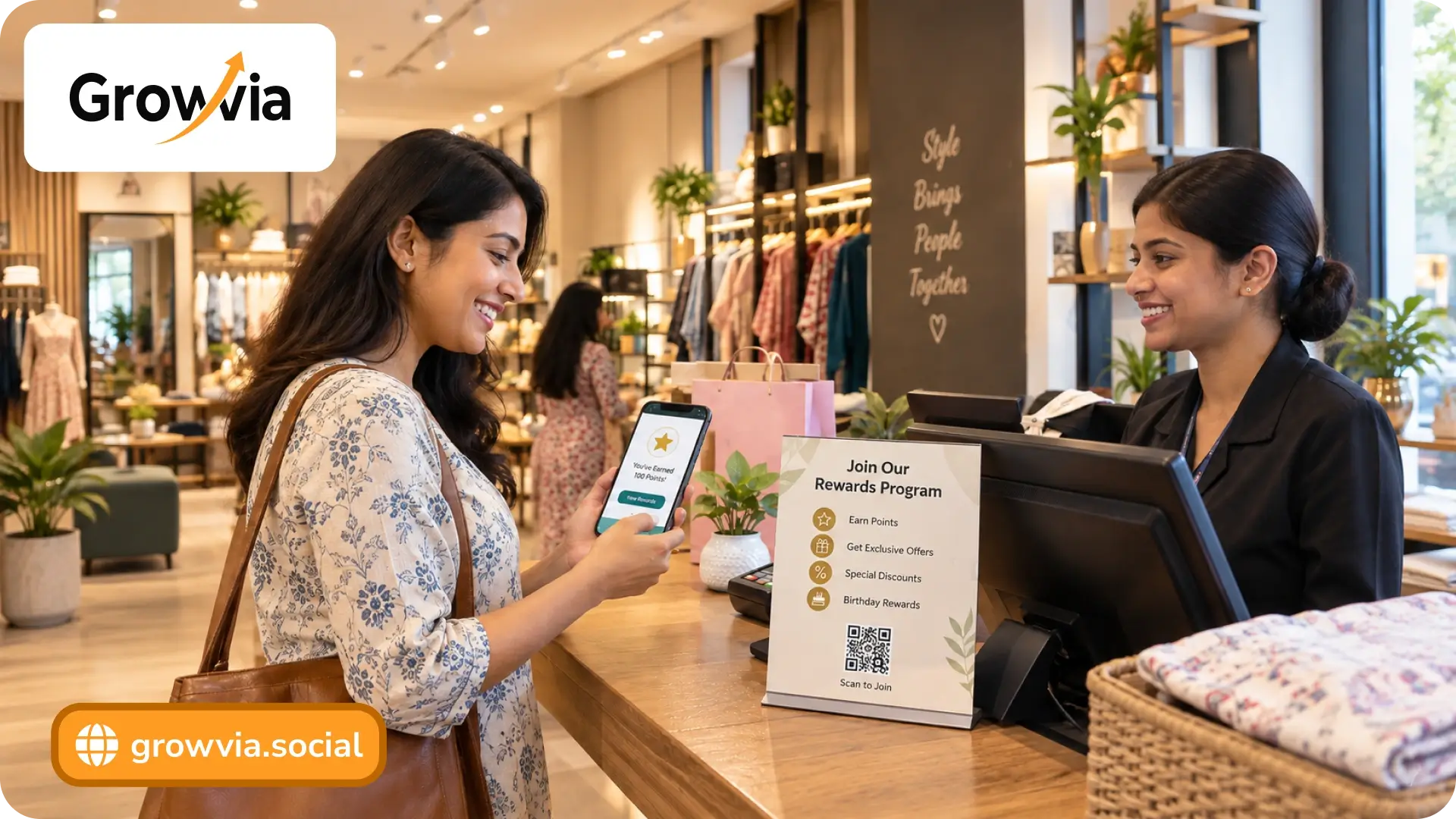
A customer buys from you once. Great! But you know you have won when they come back without needing a “20% OFF” banner shoved in their face.
That is where a good rewards program comes in handy. And no, it doesn’t have to mean handing out points for every ₹100 spent and hoping customers remember they exist. The right rewards can make customers feel recognized, give them a reason to return, and even turn regular buyers into people who actively recommend your business.
The challenge is figuring out which customer rewards program ideas actually make sense for your business. Should you reward repeat purchases? Referrals? Reviews? Milestones? Or give loyal customers perks that money simply can’t buy?
In this guide, we’ve rounded up 15 loyalty rewards program ideas that go beyond the usual points-and-discounts formula. We’ll also cover reward program names ideas , industry-specific examples, and ways to measure whether your rewards are actually bringing customers back.
15 Rewards Program Ideas for Customer Loyalty & Repeat Sales
1. Create a Spend-Based Points Program
A points system is one of the easiest ways to give customers a reason to come back, but the trick is making it feel worth their while. Let customers earn points based on how much they spend, then let them exchange those points for discounts, freebies, upgrades, or other perks. You can also offer bonus points for higher-value purchases or during slower business periods.
This turns everyday spending into progress toward something tangible. It can also fit neatly into broader customer loyalty schemes , especially when loyal customers earn at higher rates, receive surprise bonuses, or get exclusive redemption options as their relationship with your business grows.
2. Offer Bonus Rewards for Repeat Purchases
The second purchase is often more important than the first. Someone has already tried your product or service; now you need to give them a reason not to disappear. One approach is to make repeat purchases more rewarding than the initial one.
For example, customers could earn 50 points on their first purchase, 100 on their second, and 150 on their third. You could also offer a limited-time bonus for returning within 30 days. This creates a simple progression customers can understand and gives them a reason to return sooner. It also works well with loyalty rewards program ideas that reward consistent customer behavior.
3. Build a Tiered Loyalty Program
A customer who shops with you once a year shouldn’t necessarily receive the same perks as someone who visits every week. A tiered loyalty program lets you reflect that difference. Customers can move from Silver to Gold to VIP based on spending, purchase frequency, or other valuable actions. Higher tiers can unlock perks such as bonus points, free upgrades, priority service, or early access.
Just make the rules achievable and transparent. If customers suddenly lose their hard-earned status, the program can feel like a punishment. A grace period or clear downgrade warning can keep the experience positive. This is one of the more flexible customer rewards program ideas for businesses with different customer-value levels.
4. Reward Customers for Milestones
Your customer’s 10th purchase is more than just another transaction. It’s an opportunity to acknowledge that they’ve stuck around. Milestone rewards can mark moments such as a first-purchase anniversary, 10th order, one-year membership, birthday, or loyalty-program anniversary.
A cafe might unlock a free drink after 10 visits, while a salon could offer a complimentary add-on after a customer’s fifth appointment. These rewards don’t have to be expensive either. A small gift, exclusive perk, or personalized message can make the interaction feel more thoughtful. Unlike purely transactional incentives, milestone rewards recognize the relationship a customer has built with your business.
5. Introduce a “Complete the Challenge” Reward
A little competition can make an ordinary loyalty program much more interesting. Set short-term challenges that encourage customers to take specific actions, such as making three purchases in a month, trying products from three categories, visiting a store four times, or purchasing twice during a promotional period.
A progress bar or “2 out of 3 completed” message can add another layer of motivation. The key is to keep the target realistic and the reward clear. Instead of waiting for customers to make their next purchase naturally, challenges give them a specific goal to work toward, creating more frequent opportunities for engagement.
6. Give Personalized Rewards Based on Purchase Behavior
The customer who orders the same coffee every morning probably doesn’t need a coupon for something they have never shown interest in. Their reward could be a free syrup, pastry, or size upgrade instead. Personalization means using purchase history to make rewards relevant to each customer.
A salon could offer a service add-on based on previous appointments, while a retailer could give frequent shoppers early access to products in their favorite category. This is different from sending the same ₹200 coupon to everyone in your database. When the reward reflects what customers actually buy, it feels useful rather than like another generic promotion.
7. Reward Customers for Reviews and Feedback
Your loyalty program can help you find out what customers actually think. Rewarding genuine feedback is also one practical way to increase Google reviews over time. Offer a small number of points, a perk, or another benefit for completing a feedback survey or leaving an honest review. The important part is keeping the reward independent of the rating.
Customers should not be offered something only for leaving a five-star review. Instead, reward participation and genuine feedback, whether positive or negative. This gives businesses useful information while giving customers a reason to share their experience. It can also help identify recurring complaints before they turn into lost customers.
8. Launch a Referral Rewards Program
Your happiest customers can become one of your most useful acquisition channels, provided you give them a reason to make the introduction. Referral rewards can take several forms: both customers receive ₹X off, the existing customer earns points, the new customer gets a first-purchase incentive, or rewards increase after multiple successful referrals.
For example, a cafe could offer 100 points whenever a referred customer completes their first purchase. When developing referral rewards program ideas , make the qualifying action crystal clear and reward successful referrals rather than simply collecting referral links. This keeps the program focused on bringing in genuine new customers rather than generating empty sign-ups.
9. Create a Birthday or Special-Occasion Reward
A birthday message is nice. A birthday reward gives the customer a reason to do something with it. Offer a benefit that is available for a limited period, such as a free add-on, bonus points, complimentary product, or special upgrade. The expiry window matters here because an open-ended reward is easy to forget. Giving customers, say, 7–14 days to redeem it creates a natural reason to visit without making the offer feel overly restrictive.
You can also use other relevant occasions, such as a membership anniversary or the anniversary of their first purchase, to recognize customers beyond their usual buying cycle.
10. Use Gamified Rewards
What if earning a reward felt less like collecting points and more like playing a quick game? Features such as spin-to-win wheels, scratch cards, mystery rewards, digital stamp cards, and progress bars can add that element of surprise. The important thing is not to add gamification simply because it looks fun. It should make the reward easier or more enjoyable to earn.
A coffee shop could use a digital stamp card, while a retailer might use a mystery reward after a certain spending threshold. Keep the interaction quick and the rules obvious; otherwise, the game becomes another step customers have to get through before receiving their reward.
11. Reward Customers for Trying New Products or Services
Customers often stick with what they know. That makes your loyalty program a useful way to introduce them to something they might otherwise overlook. Offer bonus points when someone tries a new product category, adds an unfamiliar item to their usual order, or books a service they haven’t used before.
A cafe could reward customers for trying a new seasonal drink, while a salon could offer extra points for booking a new treatment. The goal isn’t simply to push more products. It’s to use a small incentive to reduce the hesitation that comes with trying something unfamiliar, while potentially increasing product discovery and average order value.
12. Create a “Bring Them Back” Reward
Sometimes the customer isn’t unhappy; they simply haven’t thought about you in a while. That’s where a reactivation reward can be more useful than a standard loyalty offer. Identify customers who haven’t purchased within a relevant period and send them a timely incentive, such as “It’s been 60 days since your last visit. Come back this week and receive 200 bonus points.”
The timing should reflect the normal buying cycle of your business. A restaurant may act after a few weeks, while a salon might wait considerably longer. You can even give these campaigns their own identity with reward program names ideas such as “Welcome Back Bonus,” “Comeback Rewards,” or “We Miss You Perks.”
13. Offer Exclusive Rewards Instead of Constant Discounts
Discounts can get customers through the door, but they shouldn’t be the only reason they stay loyal. Give members benefits that customers outside the program cannot access, such as early product releases, priority booking, free upgrades, complimentary add-ons, or members-only events.
These perks can create a feeling of access without forcing you to reduce the price of every purchase. For example, a salon could offer priority appointment slots to members, while a retailer could let loyalty members shop a new collection 24 hours early. The result is a program built around belonging and convenience, rather than one that trains customers to wait for the next coupon.
14. Build a Rewards Program Around Recognition
Some customers want a reward they can use; others are simply happy knowing that a business notices their loyalty. Recognition can take the form of VIP badges, customer-of-the-month features, personalized thank-you messages, anniversary acknowledgements, early access, or members-only experiences.
You could, for example, recognize customers after their 25th purchase or give long-term members access to a special event. These rewards and recognition program ideas work particularly well when combined with transactional benefits. The monetary value doesn’t always have to be significant. The feeling of being remembered can itself become part of the customer experience.
15. Create Industry-Specific Rewards
There is no universal reward that works equally well for a restaurant, gym, salon, and healthcare provider. The most useful programs connect rewards to the behaviors that matter in that particular industry.
For restaurants and cafés, visit-based rewards, free add-ons, birthday perks, and referral points can encourage more frequent visits . Retailers can experiment with category-based bonus points, early access, and product-discovery challenges. Salons and spas can reward appointment milestones, referrals, or service add-ons, while gyms can use attendance milestones and workout streaks to encourage consistent engagement.
Healthcare requires a more careful approach. Ideas for healthcare reward programs can include rewards for completing wellness education, participating in appropriate preventive-care programs, or engaging with approved health-management activities. Rewards should encourage administrative or wellness engagement rather than influence clinical decisions, treatment choices, or medically necessary care.
How GrowVia Helps with Rewards Program Ideas
Coming up with rewards program ideas is one thing. Actually running them without juggling spreadsheets, scattered customer data, and endless manual follow-ups is another.
GrowVia brings loyalty, customer engagement, and rewards into one platform. You can create loyalty campaigns, reward repeat customers, recognize valuable customer actions, and use customer data to make your offers more relevant. With tools for automated rewards, customer insights, CRM, and engagement, your team can spend less time managing the program and more time building relationships with the people who keep coming back.
Want to turn your rewards program ideas into a customer loyalty strategy that runs with less manual effort? Explore GrowVia and start building stronger customer relationships.
Grow faster with GrowVia
GrowVia helps businesses launch loyalty programs, automate customer communication, collect customer data, and measure repeat purchase growth from one simple platform.
- Automated welcome and win-back campaigns
- Reward tracking for repeat visits
- Customer segments based on behavior
- Review and referral growth support
Frequently Asked Questions
Bonus points, milestone perks, exclusive benefits, and timely comeback offers can give customers a concrete reason to return.