
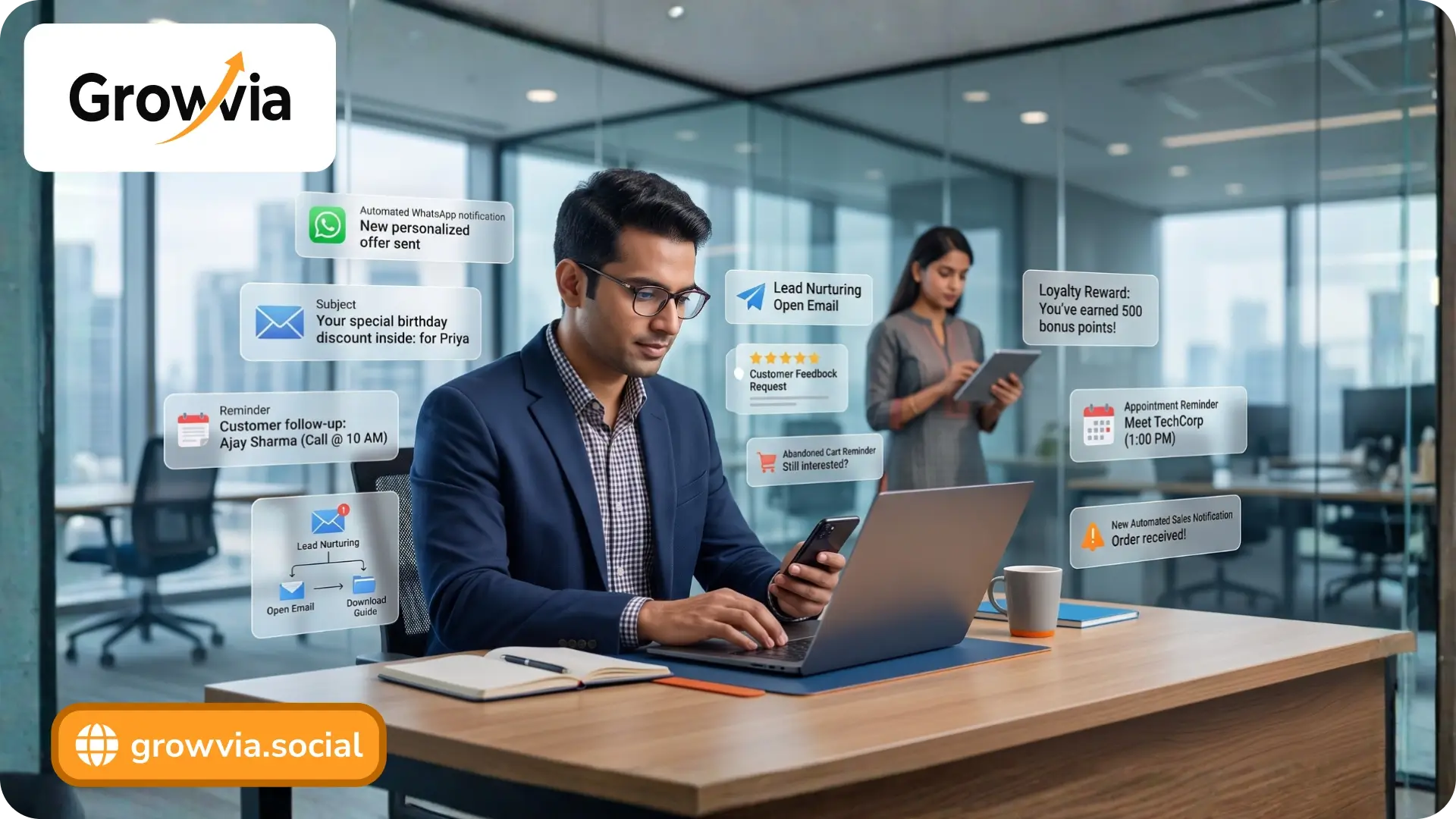
Marketing teams rarely struggle because they have nothing to do. The real problem is having too much to do at once: following up with leads, welcoming new customers, sharing content, trying to bring inactive customers back, and a lot more. Doing all of that manually is where marketing starts eating into time that could be spent on strategy.
That is one reason automation has moved well beyond being a “nice-to-have.” HubSpot’s 2026 State of Marketing found that 47.38% of marketers are leveraging automation to make their marketing processes more efficient.
But automation is not simply about sending more emails faster. Done properly, it helps businesses respond to customer actions at the right moment and deliver more relevant experiences without adding another task to the team’s list.
This becomes especially valuable when looking at B2B marketing automation examples , where lead journeys can stretch across weeks or months. The same principle applies to businesses looking for practical examples of marketing automation tools to improve engagement, conversions, and retention.
What is Marketing Automation Used For?
Marketing automation is used to take repetitive marketing work off your team’s plate while keeping customer interactions timely and relevant. The right business automation tool can support almost every stage of the marketing lifecycle, from capturing a new lead to bringing back an inactive customer. These automated marketing examples show how businesses can streamline campaigns while delivering more consistent customer experiences.
Marketing automation can help businesses with:
- Lead generation
- Lead nurturing
- Lead scoring
- Cross-selling
- Upselling
- Syncing omnichannel customer experiences
- Customer retention
10 Marketing Automation Examples You Need to Implement
Welcome Emails
Welcome emails are one of the simplest marketing automation campaign examples, but they can make a strong first impression. They automatically greet new subscribers or customers, confirm an action, introduce your brand, and guide recipients toward the next step. Sending these emails immediately keeps your business fresh in the customer’s mind while the interaction is still recent.
According to research from Invesp, welcome emails achieve an average 50% open rate , making them 86% more engaging than typical newsletters. Businesses can also create a short welcome sequence that gradually introduces products, services, useful resources, and offers, turning a simple greeting into an opportunity to build trust and encourage long-term engagement.
New Customer Onboarding
A new customer’s first few interactions can shape how they perceive your brand, making onboarding an important opportunity for automated engagement. Among the most useful marketing automation tools examples are onboarding workflows that automatically send welcome messages, product guides, tutorials, helpful resources, and follow-ups based on customer actions.
Rather than leaving customers wondering what they should do next, businesses can guide them through each stage of their initial experience. For example, a SaaS company can automatically send setup instructions after signup, followed by feature tips and a check-in email a few days later. This keeps customers engaged, helps them understand the offering faster, and can improve long-term retention.
Transactional Messages and Updates
Transactional messages are another practical marketing automation examples , helping businesses keep customers informed without requiring manual follow-ups. Many businesses now handle these through WhatsApp automation, including order confirmations, payment updates, shipping notifications, appointment reminders, delivery alerts, and account updates.. Because they are triggered by specific customer actions or events, the information reaches customers at the right moment.
Businesses can also use these messages to create useful post-purchase touchpoints, such as recommending related products or sharing helpful resources after an order. This keeps communication timely, improves the customer experience, and creates additional opportunities for engagement without adding repetitive work for marketing teams.
Requesting Customer Feedback
Customer feedback gives businesses a direct look at what customers think, while also creating opportunities to strengthen relationships. In fact, 41% of consumers in 2026 say they “always” read reviews when browsing for businesses, up from 29% last year, highlighting how strongly customer opinions influence purchasing decisions.
Marketing automation workflow examples include automatically sending feedback requests after a purchase, appointment, or service interaction. Businesses can then use responses to identify issues, improve their offerings, and invite satisfied customers to leave public reviews. This makes feedback automation useful for both customer experience and reputation management.
Social Proof and Review Requests
Positive reviews can influence purchasing decisions, making social proof a valuable part of marketing automation examples . Businesses can automatically identify customers after a purchase or successful interaction and send personalized requests for ratings, reviews, testimonials, or referrals.
The timing can also be customized, such as requesting a review a few days after delivery, when customers have had time to experience the product. This ties closely into broader efforts to increase Google reviews and build long-term local visibility. This approach helps businesses build credibility, strengthen their online reputation, and generate social proof without manually contacting every customer.
Special Event Outreach
A birthday message can feel small, but to a customer, it can make a brand feel surprisingly personal . Automated marketing examples such as birthday, anniversary, holiday, and customer milestone messages give businesses an easy way to create these moments at scale. Research has found that birthday emails generated a 481% higher transaction rate, 179% higher unique click rate, and 342% higher revenue than comparable promotional emails.
However, the message does not always need to include a discount or sales pitch. A simple birthday wish can make customers feel recognized and valued. By automating these messages based on customer data, businesses can build stronger relationships while keeping outreach timely and personal.
Cross-Selling and Up-Selling
Cross-selling complementary products and up-selling higher-value options can increase revenue while helping customers discover products that better match their needs. This makes them practical marketing automation examples for businesses looking to increase customer value. Research suggests that the most loyal 15% of customers can account for 55%-70% of total sales, highlighting the value of nurturing existing customers. Businesses can automate personalized recommendations through emails, pop-ups, and website banners using data such as:
- Purchase history and previous orders
- Website pages visited
- Products viewed or interacted with
- Videos watched and other online activity
Abandoned Cart Emails
Shopping cart abandonment costs businesses a staggering $18 billion annually in lost sales , with abandonment rates hovering around 70%. The rates can be even higher in industries such as travel, fashion, and automotive. This makes abandoned cart emails one of the most valuable examples of marketing automation tools in action.
Businesses can use customer data, browsing activity, and cart details to automatically send timely reminders, product recommendations, or incentives. A well-timed message can bring customers back to their carts and give them the nudge they need to complete their purchase, helping businesses recover revenue that might otherwise be lost.
Targeted Content Campaigns
Not every customer needs to see the same message. Targeted content campaigns use customer data, interests, behavior, and past interactions to deliver more relevant content at the right time. These are useful B2B marketing automation examples , especially for businesses managing longer buying cycles and multiple customer segments.
For example, a software company can automatically send industry-specific guides based on the pages a prospect visits or the resources they download. Businesses can also create automated email sequences featuring educational content, product insights, case studies, and relevant offers. This makes content more useful to each audience while helping marketing teams maintain consistent communication at scale.
Customer Re-Engagement
Customers can become inactive for many reasons, but that does not mean the relationship is over. Marketing automation workflow examples include automated win-back campaigns that identify inactive customers and send personalized messages to bring them back. These campaigns can be customized using purchase history, past interactions, location, and the time since their last activity.
A brand might send a reminder first, followed by a personalized product recommendation or limited-time discount. By reaching customers with relevant messages instead of generic promotions, businesses can restart conversations, encourage repeat purchases, and strengthen customer retention without manually tracking every inactive customer.
Explore Marketing Automation Platform Examples with GrowVia
Turn repetitive marketing tasks into consistent customer experiences with GrowVia . Its automation capabilities help businesses connect with customers at the right moments, personalize communication, collect valuable feedback, and bring inactive customers back.
Create targeted campaigns, automate customer journeys, manage reviews, and keep your audience engaged without constantly handling every interaction manually. GrowVia brings these capabilities together in one platform, helping your team save time while building stronger customer relationships and driving repeat business.
Ready to simplify your marketing? Explore GrowVia and put marketing automation to work for your business.
Grow faster with GrowVia
GrowVia helps businesses launch loyalty programs, automate customer communication, collect customer data, and measure repeat purchase growth from one simple platform.
- Automated welcome and win-back campaigns
- Reward tracking for repeat visits
- Customer segments based on behavior
- Review and referral growth support
Frequently Asked Questions
Marketing automation uses software to automate repetitive marketing tasks such as email campaigns, customer follow-ups, lead nurturing, review requests, and personalized communications based on customer actions or predefined triggers.